Jewelry Hallmarks: What They Mean (And What They Don't)
Here's something that trips up even experienced collectors: not every stamp you see on a piece of jewelry is a "hallmark."
People use the word loosely—any mark, any stamp, "it's got a hallmark." But in the technical sense, hallmarks are specific. They come from regulated systems, usually involving independent testing, and they tell you something verifiable about the metal.
Understanding the difference between a true hallmark, a maker's mark, and a random stamp will save you from expensive mistakes.
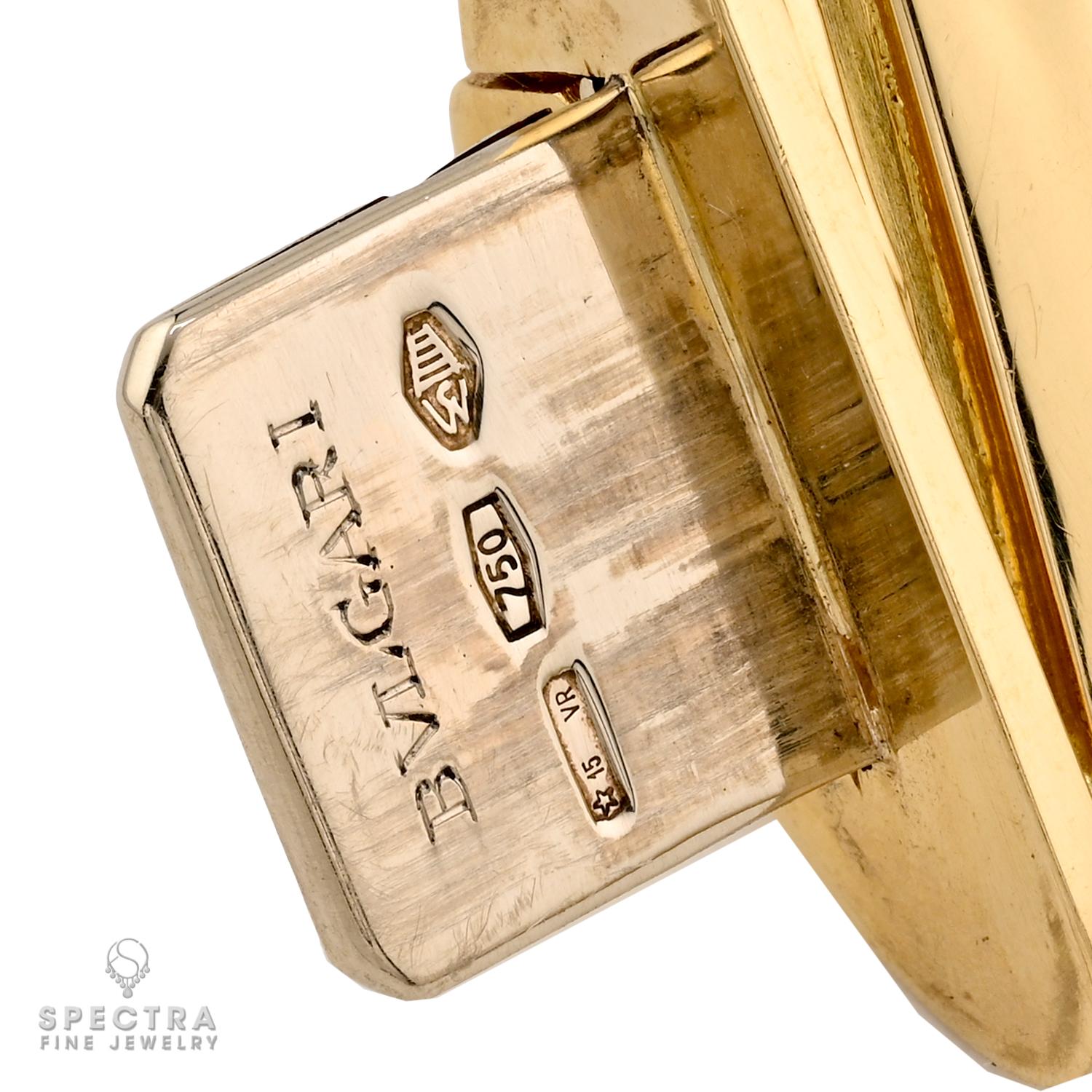 Example of proper hallmarking: This Bulgari piece shows multiple marks including "BVLGARI" (maker's mark), "750" (fineness indicating 18K gold), and the Italian star with provincial code. Together these marks tell a complete story. Photo: Spectra Fine Jewelry
What a Hallmark Actually Is
In countries with regulated systems—the UK is the clearest example—a hallmark is a set of marks applied by an independent assay office after the metal has been tested.
A proper UK hallmark typically includes:
- Sponsor's mark (who submitted the piece for testing)
- Fineness mark (the metal purity—750 for 18k gold, 925 for sterling)
- Assay office mark (which office tested it)
- Date letter (optional, but helpful for dating)
The key word is independent. The assay office is a third party. They don't care who made the piece—they just test the metal and stamp it if it passes.
That's different from a brand just engraving their name and "18K" on something. One is verified. One is a claim.
Why This Matters for Collectors
When you see an assay office mark alongside a fineness mark, you're looking at stronger evidence about the metal than "18K" alone.
It doesn't prove the piece is authentic to a particular maker. It doesn't prove the piece hasn't been altered. But it does mean someone independent confirmed the gold content at some point.
That's useful information. Treat it as such—not more, not less.
The UK System (A Good Starting Point)
I teach people the UK system first because it's well-documented and logical. Once you understand it, other systems make more sense.
The four UK assay offices:
- London (leopard's head)
- Birmingham (anchor)
- Sheffield (rose)
- Edinburgh (castle)
Each has its own symbol. When you see one of these marks, you know the piece passed through that office.
Fineness marks you'll see:
- 750 = 18 karat gold (75% pure)
- 585 = 14 karat gold (58.5% pure)
- 375 = 9 karat gold (37.5% pure)
- 950 = platinum
- 925 = sterling silver
The Problem with International Pieces
Here's where it gets complicated: not every country uses the same system, and vintage pieces have been traveling the world for decades.
A French piece might have an eagle head (18k gold) and an owl (import mark). An Italian piece might have a star and numeric code. American pieces often have no official hallmarks at all—just maker's marks and karat stamps.
The rule: Don't assume one country's system applies everywhere. A missing date letter doesn't mean "fake"—it might mean the piece came from somewhere that doesn't use date letters.
Hallmarks vs. Maker's Marks vs. Brand Signatures
Hallmark: Applied by an independent assay office. Relates to metal content.
Maker's mark (sponsor's mark): Identifies who submitted the piece for hallmarking—usually the manufacturer or sponsor. Part of the hallmark system but identifies the maker, not the metal.
Brand signature: The engraved name you see—"Cartier," "Tiffany & Co." Applied by the brand itself, not an independent office.
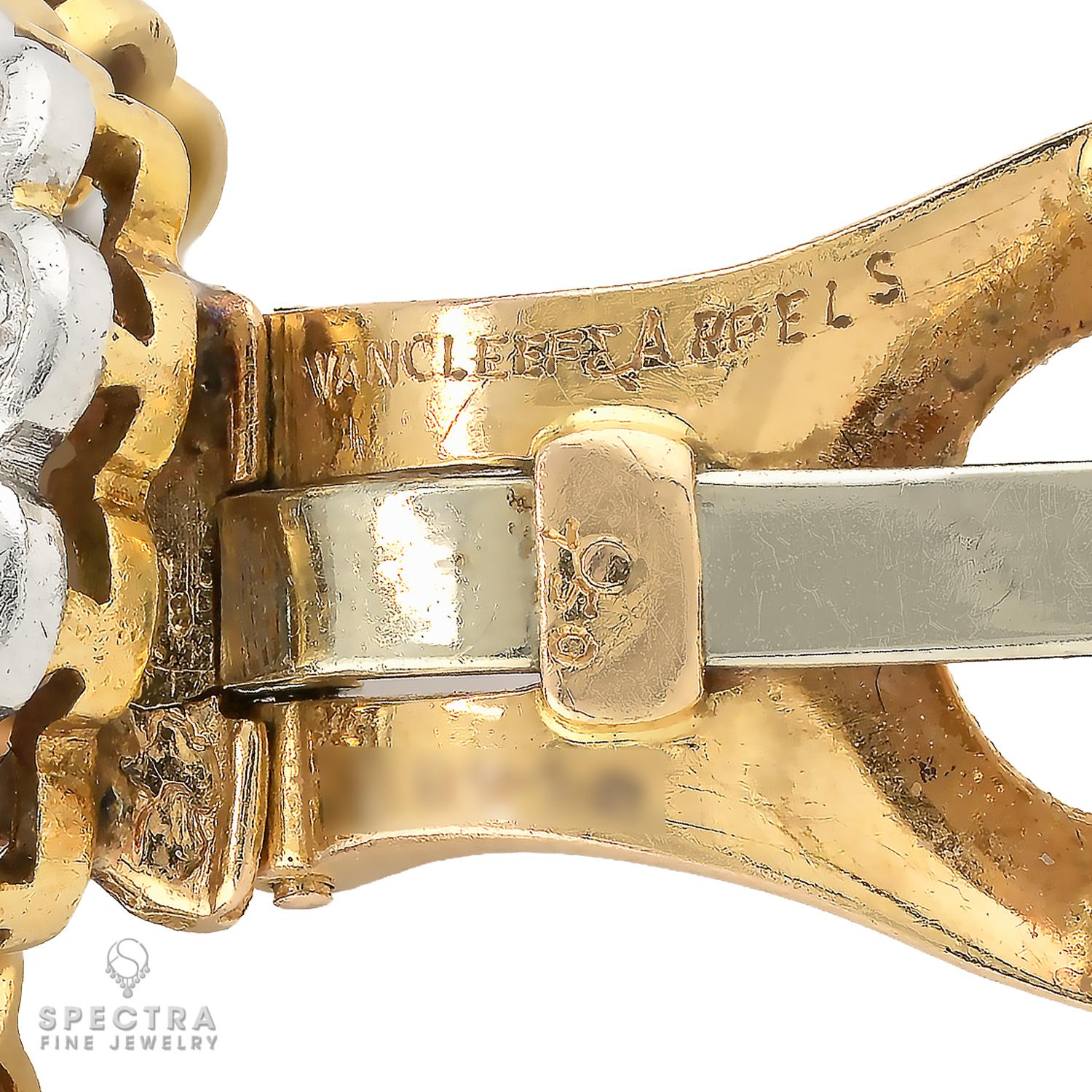 Van Cleef & Arpels earrings showing both the brand signature ("VAN CLEEF ARPELS") and French hallmarks including the eagle head mark for 18K gold. Photo: Spectra Fine Jewelry
These are different things. A piece can have all three, some, or just one. The brand signature alone tells you nothing about metal content. The hallmark tells you nothing about brand authenticity.
You need to read them together.
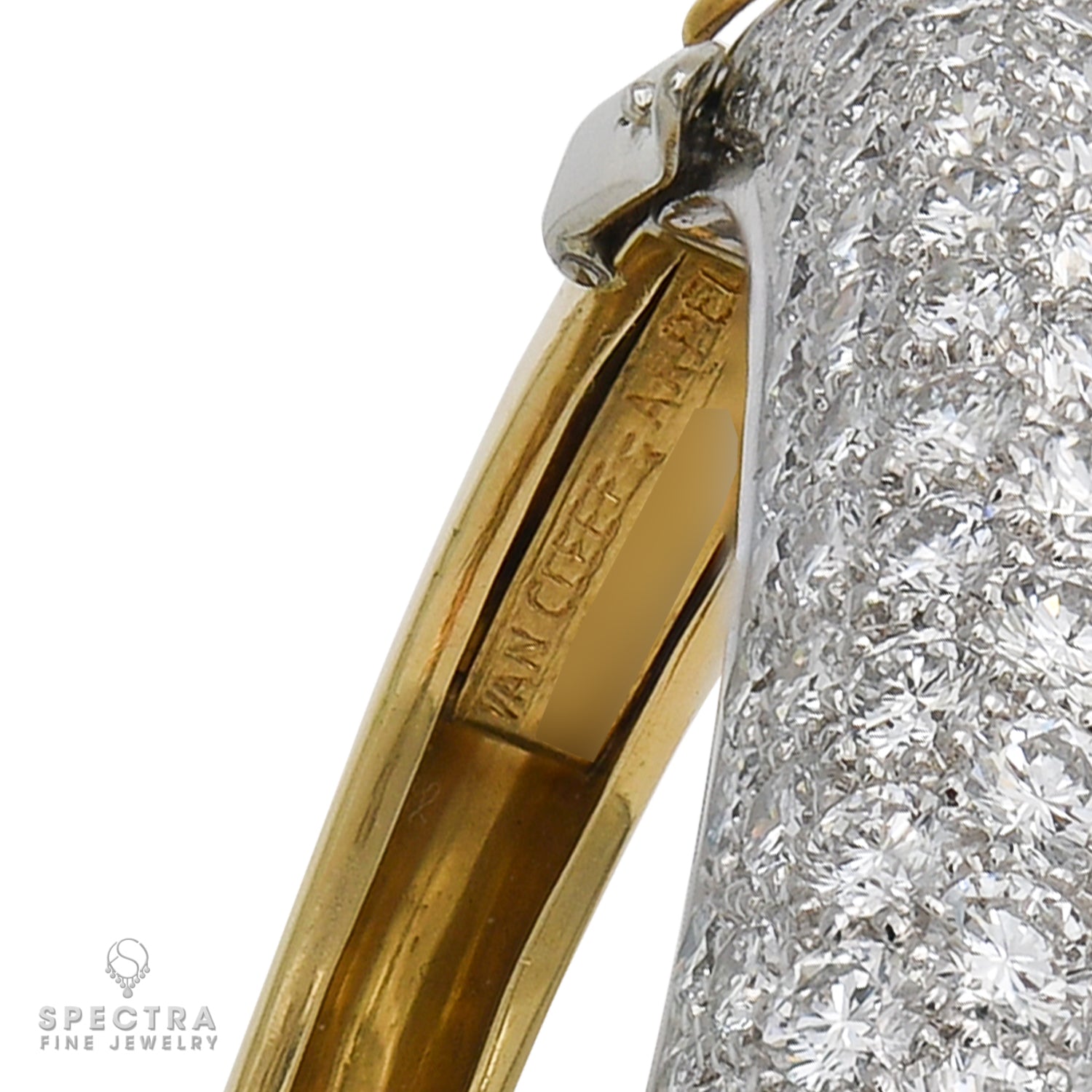 Van Cleef & Arpels diamond pavé bangle showing the maker's signature. Even on this heavily set piece, the marks are placed in an accessible location. Photo: Spectra Fine Jewelry
What Hallmarks Can Prove
✓ Metal fineness (in systems where testing is independent) ✓ Which assay office tested it (and sometimes when) ✓ Who submitted it for testing (sponsor's mark)
What Hallmarks Cannot Prove
✗ That the piece is authentic to a specific brand ✗ That all components are original ✗ That the piece hasn't been altered, resized, or repaired ✗ That you should pay a premium for the name on it
Common Mistakes I See
1. Treating "750" as proof of quality. 750 tells you gold content. That's it. Plenty of mediocre jewelry is 18k gold.
2. Panicking over missing date letters. Many legitimate pieces don't have them. Wear erases them. Some systems don't use them.
3. Assuming a crisp hallmark means the piece is recent. Re-polishing can make old stamps look sharper. Location and context matter more.
4. Confusing any stamp with a regulated hallmark. In the US, "14K" is a claim, not independent verification. Different level of evidence.
The Practical Takeaway
When examining a piece:
- Find all the stamps, not just the brand name
- Identify what type each stamp is (hallmark, maker's mark, brand signature, serial)
- Ask if they're consistent with each other and with the piece's apparent age
- Don't overweight any single mark—they're evidence, not verdicts
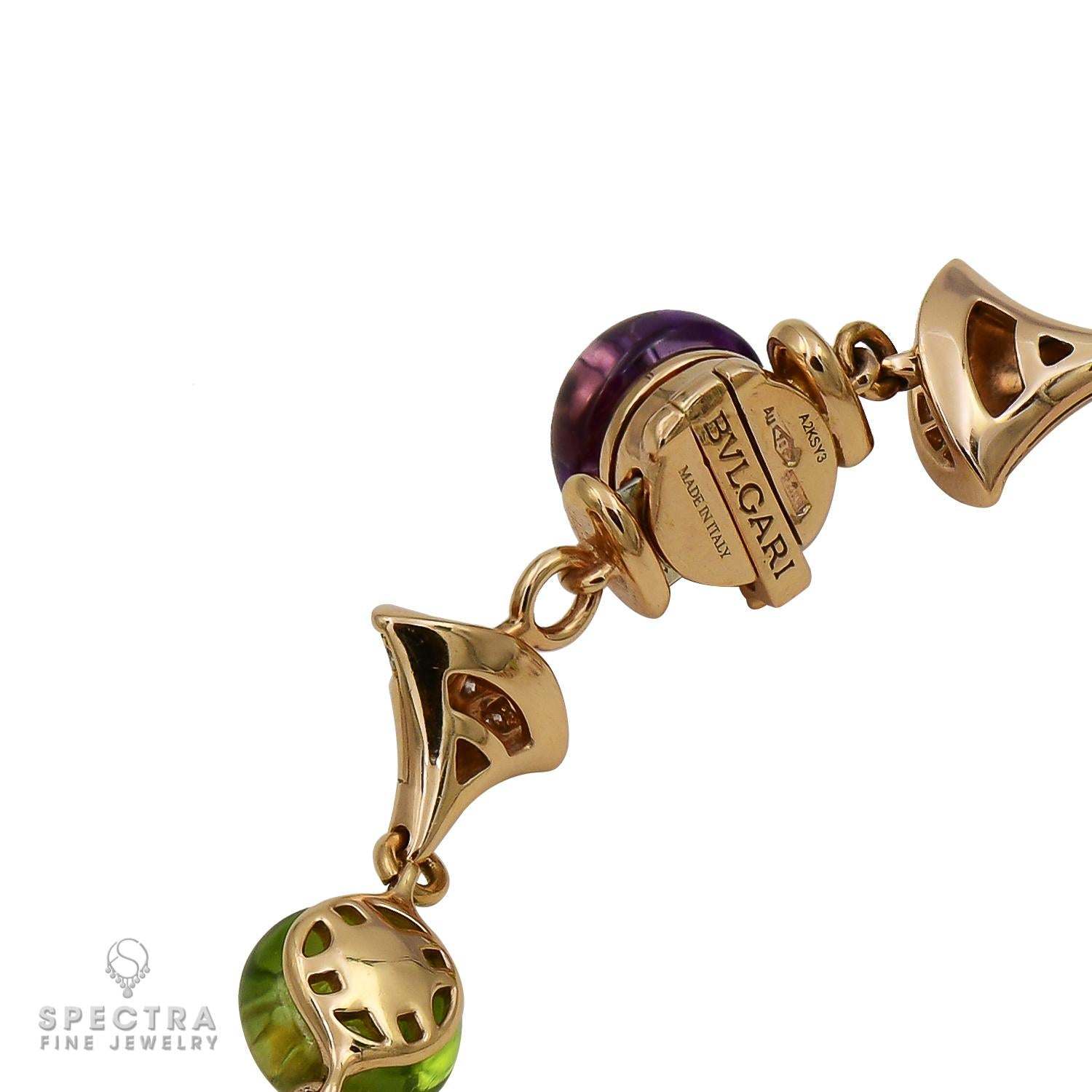 Bulgari Divas' Dream necklace showing the maker's signature alongside serial numbers. Modern pieces often include both traditional hallmarks and contemporary tracking numbers. Photo: Spectra Fine Jewelry
Go Deeper
Gold Hallmarks Explained → The 750/18K/585 breakdown and what to watch for.
Platinum & Silver Marks → White metals are where people get confused. Here's how to read them.
Where to Find Hallmarks → Know exactly where to look on rings, bracelets, necklaces, and more.
Authentication Guide → The step-by-step workflow for verifying signed pieces.
Visual Hallmark Reference → See what authentic marks actually look like.
Need Help Reading Marks?
Send photos. We'll tell you what we see—no pressure, no BS.
This page references UK hallmarking guidance and assay office documentation. Independent educational resource—not affiliated with any brands mentioned.
Identify Your Hallmarks
Need Help?
Send photos of a piece you're evaluating. We'll give you a straight read—no pressure, no BS.
Contact Spectra Fine Jewelry →Ready to Browse Authenticated Pieces?
Every item at Spectra Fine Jewelry goes through our verification process before it hits the case. No guesswork. No surprises.